The I-35 Disaster That Exposed a Broken System: Wrong License, No Records, and Five People Dead
A deadly pileup on Interstate 35 in Austin was catastrophic enough on its own. Seventeen vehicles. Five people killed — among them a child and a baby. Eleven others injured. Witnesses described a semi-truck moving at full speed through nearly stopped traffic in a construction zone late at night, as if nothing in its path existed at all.
One year later, a federal investigation has revealed that the tragedy wasn’t just the result of one driver’s actions on one terrible night. It was the product of institutional failures stacked on top of each other — a state agency that issued the wrong license, a trucking company that kept almost no records, and a regulatory gap wide enough to let a dangerously unqualified driver get behind the wheel of an 80,000-pound commercial truck on one of Texas’s most congested corridors.
The findings, laid out in a report by the National Transportation Safety Board (NTSB), raise urgent questions about accountability — not just for the driver, but for every layer of oversight that was supposed to prevent exactly this kind of crash.
What the NTSB Found
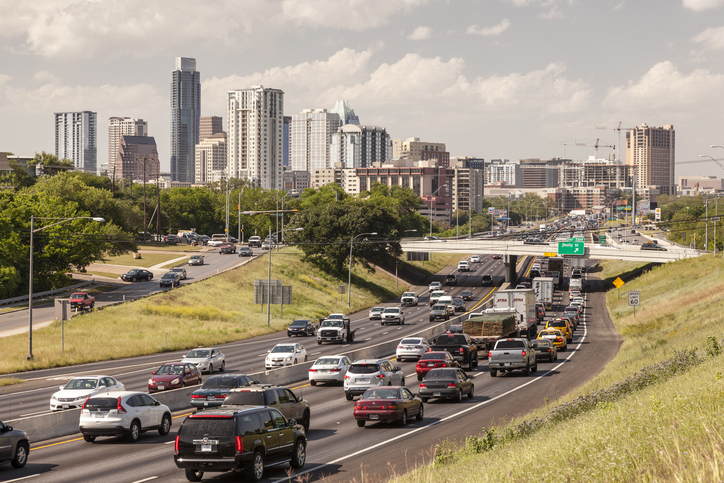
The crash occurred on the night of March 13, 2025, on I-35 southbound near Parmer and Howard Lanes in north Austin. The driver of the semi-truck, Solomun Weldekeal-Araya, now faces five counts of felony manslaughter and seventeen aggravated assault charges. He is currently out on bond, with his next court date set for May 2026. Multiple civil lawsuits are also active.
The criminal charges are still working their way through the Travis County court system. But the NTSB’s findings go beyond the driver himself — and that’s where things get especially troubling.
When Weldekeal-Araya received his commercial driver’s license from the Texas Department of Public Safety in 2021, investigators determined he should have been issued a non-domiciled CDL. This type of license is tied to an applicant’s employment authorization, meaning it would have expired when his work authorization card did — in October 2022, well before the March 2025 crash. Instead, the state issued him a standard, unrestricted CDL that didn’t expire until 2023.
The Federal Motor Carrier Safety Administration (FMCSA), which reviewed the state’s process, declined to speculate on what documentation the driver may have presented at later licensing events. But the agency’s review made clear that the original issuance in 2021 was wrong. Texas, at the time, had not established a framework for recognizing refugees as a distinct category of applicant — so eligible or not, they received standard licenses under the state’s existing policies.
In the aftermath of this crash and others across the country, the U.S. Department of Transportation issued an emergency rule in September 2025 restricting who can qualify for non-domiciled CDLs. Texas has since suspended issuance of these licenses entirely while it develops a compliance plan.
A Trucking Company That Ran on Informality
The licensing problem wasn’t the only thing the NTSB’s report exposed. Investigators took a hard look at ZBN Trucking, the carrier Weldekeal-Araya was working for when the crash occurred. What they found was a company operating with almost no formal structure.
According to the report, the owner of ZBN Trucking acknowledged that when he needed to bring on a new driver, he reached out to people within his personal community — specifically, the Eritrean community he belonged to — and filled openings through those connections. There was no formal hiring process. The only stated requirement was a valid CDL and a clean motor vehicle record.
That’s it. No documented training. No driver qualification file beyond the basics. A business built on trust and community ties, hauling loads on major interstates with minimal paper trail.
In the trucking industry, this kind of recordkeeping isn’t just a best practice — it’s a federal mandate. The FMCSA requires carriers to maintain detailed driver qualification files, including documentation of safety performance history, medical certificates, road test records, and more. The gap between what ZBN Trucking maintained and what federal regulations require speaks directly to how this crash became legally actionable on multiple fronts.
Victims’ families and injured survivors have filed lawsuits against the driver, ZBN Trucking, a construction company involved in the lane closure, and Amazon, the company whose freight was being hauled at the time. Attorneys representing the plaintiffs have described the damages sought — in some cases exceeding $100 million per plaintiff — as reflective of a tragedy that wiped out entire family units in a single moment.
Why Trucking Cases Are Different from Regular Car Accidents
Most people assume a truck crash lawsuit works the same way as any other vehicle accident claim. It doesn’t. The web of potential defendants is broader. The regulations are more complex. The evidence — electronic logging data, black box information, driver qualification records, dispatch communications — disappears faster than most people realize.
Crashes like this one illustrate how liability in a trucking case can extend far beyond the driver. A carrier that fails to vet drivers properly, maintain required documentation, or provide adequate supervision can face direct liability under federal safety regulations. In cases where a shipper like Amazon is involved, questions can arise about how loads were assigned, whether hours-of-service rules were being followed, and what oversight responsibility the shipper bore.
In Texas, trucking litigation is also shaped by a 2021 legislative change that made it significantly harder to hold carriers directly liable in certain circumstances — a law that trucking industry groups pushed for aggressively and that victim advocates have criticized sharply. Understanding how that law interacts with the specific facts of any given crash matters enormously.
Anyone dealing with the aftermath of a serious commercial truck collision — whether as a victim or a surviving family member — is up against insurers, defense attorneys, and often multiple corporate defendants, all of whom have one goal: minimize what they pay. Consulting an Austin Truck Accident Lawyer who understands both the federal regulatory framework and Texas’s specific legal landscape can make a decisive difference in how those cases are handled.
Sleep, Cell Phones, and the Hours Before the Crash
One of the more detailed portions of the NTSB’s investigation focused on Weldekeal-Araya’s activity in the days leading up to the crash. Investigators analyzed his phone data, driving records, and the time available for sleep in the hours before he took the wheel that night.
The findings suggested he may have had limited sleep in the period before the crash. The NTSB documented what it called “sleep opportunity periods” — windows between the driver’s last known activity and the start of the next period — and found them to be shorter than what would be expected for someone operating a commercial vehicle safely. The report also noted his phone activated one minute before the crash, though no specific activity was recorded at the moment of impact.
Weldekeal-Araya’s attorney has maintained that his client was not under the influence of drugs or alcohol — a claim supported by blood test results — and that nothing in the NTSB findings rises to the level of conscious disregard required under Texas law for a recklessness finding. The full NTSB report, including the agency’s determination of probable cause, had not yet been released as of this writing.
A Systemic Warning, Not Just a Local Tragedy
The I-35 crash didn’t happen in isolation. Transportation Secretary Sean Duffy specifically referenced it during his September 2025 announcement of the emergency CDL rule changes, calling it one of several crashes that year where improperly licensed commercial drivers caused fatal accidents. A similar pattern had emerged in Florida and Alabama.
What Austin witnessed that night was, in part, a failure of systems designed to prevent it. A licensing agency that applied the wrong standard. A carrier that mistook community trust for a compliance program. A federal oversight structure that didn’t catch the error before five people died.
The civil litigation now grinding its way through the courts will attempt to assign financial responsibility across those layers. That process, for families who lost children and spouses and parents in a highway construction zone late on a weeknight, is long and painful. But it’s also one of the few mechanisms available to hold institutions — not just individuals — accountable when their failures cost lives.
The NTSB’s full probable cause determination will shed additional light on the sequence of decisions and failures that led to the crash. For the families and the injured survivors still waiting for resolution, that report can’t come soon enough.