
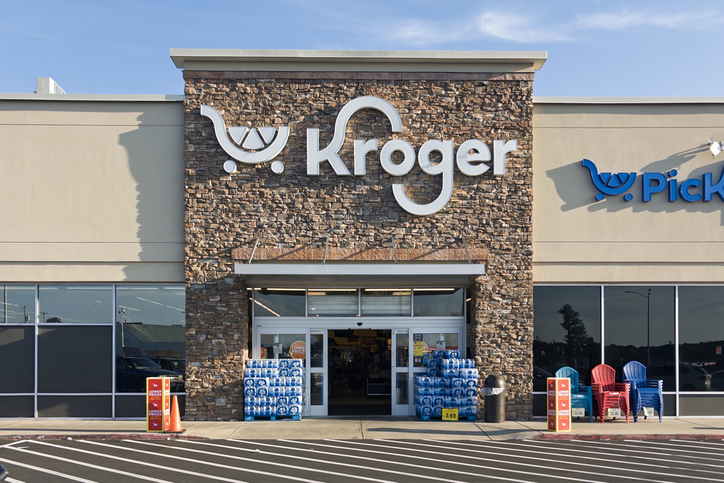
Below, we break down what the case alleged, why a judge allowed it to move forward, and what the legal concepts at its center — causation and foreseeability — mean for families weighing a wrongful death claim.
What the Lawsuit Alleged
According to reporting by WKRC Local 12, the Seyfried family filed suit in 2021 against Kroger and two of its employees. The complaint alleged that beginning in October 2020, a manager at the Milford store launched an effort to force Seyfried out over his political views and his choice to wear a mask during the height of the pandemic.
The allegations grew increasingly disturbing as the case developed. The family claimed Seyfried was followed to his home, received threatening text messages, and was even sent child pornography by those targeting him. After 19 years with the company, Seyfried stepped down from his position in February 2021 and asked to be transferred to a different store. His family alleged that the pattern of hazing, bullying, and intimidation he endured from his superiors was directly responsible for his death.
Kroger’s attorneys denied the allegations. The company argued it had no way of anticipating that Seyfried might take his own life — a defense that goes to the heart of how wrongful death law works.
Why the Case Survived: Causation and Foreseeability
The settlement did not include any finding that Kroger or its managers legally caused Seyfried’s death. But an earlier ruling proved pivotal. A Hamilton County Common Pleas judge reportedly concluded that the alleged pattern of intentional conduct raised genuine factual questions about causation and foreseeability — questions that could not be resolved in the company’s favor without a trial, as reported by LawCommentary.com.
That distinction matters. In most wrongful death cases, a plaintiff must establish two connected ideas:
- Causation — that the defendant’s conduct actually led to the death, rather than some unrelated cause.
- Foreseeability — that a reasonable person in the defendant’s position could have anticipated that harm might result from the conduct.
Historically, courts have often treated suicide as an “intervening act” that breaks the chain of legal causation, shielding a defendant from liability. But that rule has never been absolute. Where a defendant’s intentional or extreme conduct is alleged to have driven a person to that point — and where the outcome was arguably foreseeable — some courts have allowed juries to decide the question. By letting the Seyfried claims proceed, the court signaled that the family’s allegations were serious enough to warrant that scrutiny. The settlement that followed spared both sides the uncertainty of a verdict.
Understanding Wrongful Death Claims
A wrongful death lawsuit is a civil claim brought by surviving family members against a person or entity whose negligent, reckless, or intentional conduct caused a death. Unlike a criminal prosecution, which is pursued by the government and can result in imprisonment, a wrongful death action is aimed at compensating the family for the losses they suffer when a loved one is taken from them.
Depending on the jurisdiction and the facts, those damages can include medical expenses incurred before death, funeral and burial costs, lost wages and future earnings the deceased would have provided, loss of companionship and guidance, and, in cases involving especially egregious conduct, punitive damages. The Legal Information Institute at Cornell Law School offers a helpful overview of how these claims are generally structured.
Wrongful death law varies significantly from state to state. Each jurisdiction sets its own rules about who may file, what damages are recoverable, and how long families have to act. In Georgia, for example, a wrongful death claim generally must be filed within two years of the date of death, and the right to bring the claim follows a specific order of priority — typically the surviving spouse first, then the children, then the parents, and finally the estate. Families dealing with a preventable loss in that state often turn to a Buford, GA wrongful death lawyer to understand their rights and the deadlines that apply to their situation.
Employer Liability and the Modern Workplace
The Kroger settlement lands at a moment when the boundaries of employer responsibility are being tested. Workplace harassment claims have traditionally focused on discrimination, retaliation, and hostile work environments under employment statutes. Cases like this one push into different territory — the idea that an employer’s failure to stop severe, targeted mistreatment can carry consequences under tort law when that mistreatment contributes to a tragedy.
For employers, the takeaway is that credible reports of harassment cannot be treated as ordinary interpersonal friction. When conduct escalates to stalking, threats, or the transmission of illegal material, a company’s response — or lack of one — may later be examined through the lens of what it knew and what it reasonably should have anticipated. For families, the case is a reminder that the law continues to evolve, and that allegations once assumed to be legally hopeless can, on the right facts, reach a jury.
Frequently Asked Questions
Can an employer be held liable when workplace harassment leads to an employee’s suicide?
It is difficult, but not impossible. Courts have often treated suicide as an intervening cause that limits liability. However, where an employer’s intentional or extreme conduct is alleged to have driven the outcome and that outcome was arguably foreseeable, some courts will allow the claim to proceed. The specific facts and the governing state law are decisive.
What is the difference between causation and foreseeability?
Causation asks whether the defendant’s conduct actually produced the harm. Foreseeability asks whether a reasonable person could have anticipated that harm might result. A plaintiff generally must establish both to recover in a wrongful death case.
Who can file a wrongful death lawsuit?
This depends on the state. Most jurisdictions grant priority to close family members such as a surviving spouse and children, followed by parents, and then the estate. A local attorney can confirm who has standing to file in a particular case.
How long do families have to file a wrongful death claim?
Deadlines, known as statutes of limitations, vary by state. In Georgia, the deadline is generally two years from the date of death, though exceptions can apply. Because missing the deadline can permanently bar a claim, families are encouraged to seek legal guidance promptly.
The Bottom Line
The confidential terms of the Kroger settlement mean the public may never learn its full dimensions, and the resolution carries no admission of fault. But the case leaves a mark. It shows that allegations of severe workplace harassment can survive early dismissal and force a serious reckoning over causation and foreseeability — the twin pillars on which so many wrongful death claims stand or fall. For any family navigating a loss they believe could have been prevented, understanding those concepts, and the deadlines that govern them, is the essential first step.
If you or someone you know is struggling or in crisis, help is available. Call or text 988 to reach the 988 Suicide & Crisis Lifeline, available 24 hours a day, seven days a week.
Disclaimer: This article is provided for general informational purposes only and does not constitute legal advice. It is not a substitute for the advice of a licensed attorney. Laws vary by jurisdiction and change over time, and the outcome of any legal matter depends on its specific facts. Reading this article does not create an attorney-client relationship. If you have questions about a potential wrongful death claim, consult a qualified attorney licensed in your state. This post references reporting by third-party news outlets and contains a sponsored link.