
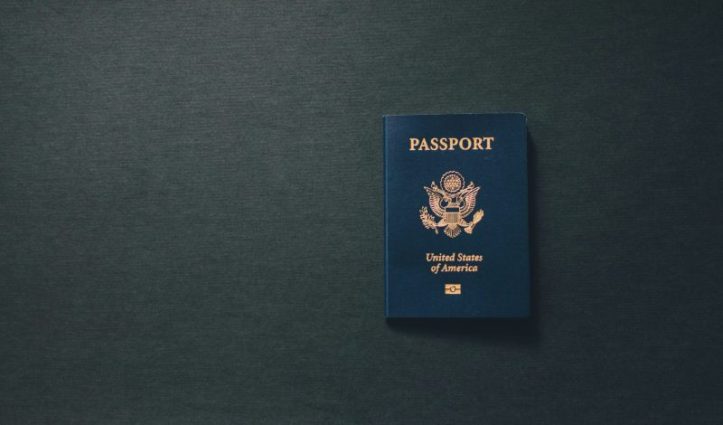
The U.S. Government Is Now Revoking Passports for Unpaid Child Support — What Parents Need to Know
The federal government has moved from passive enforcement to active passport revocation for parents behind on child support. As of May 8, 2026, the U.S. State Department began revoking existing passports — not just denying renewals — for parents who owe significant child support arrears. This is a major shift in how the government enforces family law obligations, and the consequences reach far beyond the inability to take an international vacation.
If you or someone you know has a child support order and has fallen behind on payments, the time to act is now. A revoked passport can affect employment, international travel, and in some cases, business dealings that cross borders. Understanding the law — and your options — could make all the difference.
What the Law Actually Says
The legal foundation for this enforcement action has existed for three decades. The Personal Responsibility and Work Opportunity Reconciliation Act of 1996 (PRWORA) created the federal Passport Denial Program, which authorized the government to deny passports to parents who owe more than a set threshold in past-due child support. The Deficit Reduction Act of 2005 later lowered that threshold from $5,000 to $2,500 — meaning even a few months of missed payments on a typical support order can trigger the program.
Under 42 U.S.C. § 652(k), the State Department is required to refuse to issue a passport if an individual has been certified as owing more than $2,500 in child support arrears. For years, however, enforcement was largely passive — the government only acted when someone applied for a new passport or renewal. That changed in 2026.
The U.S. State Department’s May 2026 announcement confirmed that the Trump administration is now coordinating with the Department of Health and Human Services (HHS) on what officials describe as an unprecedented scale to proactively revoke passports of Americans carrying significant child support debt.
How the Passport Denial Program Works — Step by Step
The process involves multiple federal and state agencies working in concert:
- State certification. A state child support enforcement agency determines that a non-custodial parent owes more than $2,500 in past-due support and certifies that debt to the federal Office of Child Support Enforcement (OCSE).
- Federal forwarding. OCSE compiles the certified cases and transmits them electronically to the U.S. State Department, where names are entered into the Consular Lookout and Support System (CLASS).
- Passport action. The Secretary of State denies any new passport application from individuals on the list. Under the expanded 2026 enforcement, the State Department is also revoking existing valid passports — starting with those owing $100,000 or more, with a planned expansion to all obligors above the $2,500 threshold.
- Notice and 90-day window. For new applications, the State Department holds the application for 90 days to allow arrears to be paid. If the debt is resolved within that window, the application can proceed.
- Revocation is final. Once a passport is revoked, it is permanently void — it cannot be “reactivated.” Even after the debt is fully paid and HHS updates its records (a process that can take time), the individual must apply for a brand-new passport.
The program currently covers all 50 states, the District of Columbia, Guam, Puerto Rico, the U.S. Virgin Islands, and 63 tribal nations. Since the program’s inception, combined collections have totaled nearly $621 million, with $30 million collected in 2024 alone, according to congressional research records.
Who Is Affected — and What the Numbers Look Like
The initial rollout targeted roughly 2,700 passport holders who owe $100,000 or more in past-due child support, a figure first widely reported in early 2026. That number is expected to grow dramatically as enforcement expands to the $2,500 threshold. Given the millions of Americans who are currently behind on child support — a figure the federal government estimates in the tens of billions of dollars nationally — the potential scope of this program is enormous.
H.R. 6903, the Ensuring Children Receive Support Act, passed the U.S. House by voice vote in April 2026. The bill would amend the Social Security Act to make passport revocation a mandatory enforcement remedy (rather than discretionary), while preserving limited-validity emergency passports for genuine humanitarian situations.
What Happens If You’re Abroad When Your Passport Is Revoked?
This is one of the most serious practical concerns raised by the new enforcement policy. If a parent is traveling internationally at the time of revocation, their passport becomes immediately void. They would need to contact the state where the child support debt is owed and may visit a U.S. embassy or consulate. In those cases, the State Department says the individual may be eligible only for a limited-validity passport to return directly to the United States — not for general travel — until HHS verifies that the debt has been repaid.
The Child Support Context: Why These Laws Exist
Passport revocation is one tool in a broader arsenal of child support enforcement mechanisms. Child support represents a critical financial lifeline for millions of custodial families. Congressional research indicates that for low-income families who actually receive it, child support makes up an average of 41 percent of total household income — a figure that underscores why enforcement matters.
Federal and state law provide a range of enforcement tools beyond passport denial, including:
- Wage garnishment — typically the primary collection method, often automatic
- Tax refund interception — federal and state refunds can be seized for arrears
- Credit bureau reporting — unpaid support is reported to credit agencies
- Driver’s license suspension — states can suspend or revoke driving privileges
- Bank account levies — funds in financial accounts can be seized
- Contempt of court proceedings — willful non-payment can result in jail time
Passport revocation is now squarely in that enforcement toolkit, and this administration has made clear it intends to use it.
What to Do If You Owe Back Child Support
If you owe more than $2,500 in child support arrears, the most important step is to act before enforcement catches you off guard. Here is a practical roadmap:
- Contact your state child support enforcement agency. Find out your exact arrears balance and whether your case has been certified to the federal program. You may have more time than you think — or less.
- Explore a payment plan. Some individuals who enroll in a formal payment plan may be able to avoid or delay passport revocation. Check with your state agency and confirm the terms in writing.
- Request an administrative review if your balance is disputed. You have the right to challenge the amount certified. Importantly, disputes must be resolved with your state agency — the State Department cannot adjudicate them, as it relies entirely on state certifications.
- Consider a support order modification. If your financial circumstances have changed substantially since the original order was entered — job loss, medical issues, income reduction — you may be eligible to seek a modification through the court that issued the order. A modification does not eliminate arrears already owed, but it can make future compliance realistic.
- Consult a family law attorney. The stakes here go beyond travel inconvenience. A revoked passport, an enforcement action, or a contempt proceeding can affect your livelihood, your professional licenses, and your freedom. Legal counsel familiar with your state’s enforcement process and family court system can help you understand your options and navigate the system. If you are in the Minneapolis area, the family law attorneys in Minneapolis at HL Law Firm can provide guidance on child support enforcement, modification proceedings, and your rights under both state and federal law.
What Custodial Parents Should Know
For parents who are owed child support, this enforcement expansion is a potentially significant development. If the non-custodial parent in your case has a valid passport and owes more than $2,500 in arrears, your state child support agency should already be reporting that case to the federal program. If you believe that is not happening, contact your state agency directly to verify.
Custodial parents can also pursue enforcement through family court — filing for contempt, requesting wage garnishment orders, or seeking other judicial relief — regardless of the federal passport program. These remedies are complementary, not exclusive.
Frequently Asked Questions
What is the minimum amount of unpaid child support that can trigger passport denial?
Federal law sets the threshold at $2,500 in past-due child support. The Deficit Reduction Act of 2005 reduced this from the original $5,000 threshold established by the 1996 PRWORA. Even a few months of missed payments on a typical support order can exceed this limit.
Can I get my passport back after paying the debt?
Not automatically. Once a passport is revoked, it is permanently void. After the debt is paid in full, HHS must update its records — a process that can take time — and the individual must then apply for an entirely new passport. Paying the debt removes the hold, but does not “restore” the revoked document.
What if I can’t afford to pay my full child support arrears at once?
Enrolling in a formal payment plan with your state child support enforcement agency may prevent or delay revocation. You should contact your state agency immediately to discuss options. A family law attorney can also help you assess whether a formal modification of your support order is appropriate given your current financial circumstances.
Is this a new law or an existing one?
The underlying legal authority has existed since 1996. What changed in 2026 is the enforcement posture — the government moved from passive denial of renewals to active, proactive revocation of valid existing passports, based on data coordination between HHS and the State Department.
What if I think my child support balance is wrong?
You have the right to request an administrative review. However, disputes must be resolved at the state level — with the child support enforcement agency that certified your case. The State Department cannot investigate the underlying debt; it acts only on state certifications. An attorney can help you navigate the dispute process.
Can I lose my passport even if I’m not behind on ongoing payments but owe old arrears?
Yes. The program is based on the total arrearage balance, including amounts accumulated before any modification. Even if you are current on your monthly obligation going forward, old unpaid arrears that exceed $2,500 can still result in passport denial or revocation.
Does the passport denial program apply in all states?
Yes. All 50 states, the District of Columbia, Guam, Puerto Rico, the U.S. Virgin Islands, and 63 tribal nations participate in the federal Passport Denial Program. Participation is not optional for state child support agencies.
What should I do if I’m abroad and my passport gets revoked?
Contact the nearest U.S. embassy or consulate immediately. The State Department may issue a limited-validity passport that allows you to return directly to the United States while you resolve the underlying debt with your state child support agency. You will not be stranded — but your international travel will be severely restricted until the arrears are addressed.
Can I be jailed for not paying child support?
Yes. Non-payment of child support can result in civil contempt of court proceedings in family court, which can carry jail time. Passport revocation and contempt actions are separate enforcement tools and can proceed simultaneously. Federal criminal charges under the Deadbeat Parents Punishment Act may also apply in cases involving willful, long-term non-payment across state lines.
Where can I find help with child support enforcement or modification?
Your state child support enforcement agency is the first point of contact. For legal representation and advice on your rights — whether you are the obligor or the custodial parent — consulting a family law attorney is strongly recommended. If you are in Minnesota, family law attorneys in Minneapolis can help you understand your options under both Minnesota law and the federal enforcement framework.